
Quran Classes for Kids: Safe, Structured, and Genuinely Engaging
Choosing a Quran teacher for your child is one of the more consequential decisions a parent makes, and safety comes before everything else on this page. Below you’ll find exactly what we do to protect your child, what a class actually looks like, and how the curriculum is structured from your child’s very first Arabic letter onward.

وَلَقَدْ يَسَّرْنَا الْقُرْآنَ لِلذِّكْرِ فَهَلْ مِن مُّدَّكِرٍ
“And We have certainly made the Qur’an easy for remembrance, so is there any who will remember?”
Surah Al-Qamar, 54:17
Background-checkedevery children’s teacher
Parents can sit inon any class, any time
Male or female teacheryour choice, from day one
Seven-day free trialno charges at all
What’s the Right Age to Start, and What Changes as My Child Grows?
There’s no single “correct” starting age, and the right approach changes considerably between a 4-year-old and a 12-year-old. Here’s what to realistically expect at each stage.
Ages 4 to 5
Early Starters
Some children this age are ready for very short, playful sessions, typically 15 to 20 minutes, built around repetition, simple songs, and letter recognition rather than formal instruction. Many children this age aren’t ready yet, and that’s completely normal; readiness at this stage depends far more on individual temperament than age itself. If your child struggles to sit still for a short story, they may benefit from waiting several months before starting.
Ages 6 to 8
The Most Common Starting Age
Most children begin in this window, with sessions around 20 to 30 minutes and a steady, standard pace through Noorani Qaida. Attention span is developing but still limited, so lessons lean on variety and encouragement rather than long, repetitive drilling. This is generally considered an ideal window: old enough to focus in short bursts, young enough that habits and correct pronunciation form naturally.
Ages 9 to 12
Faster, More Independent Progress
Children in this range typically sustain focus for longer, 30 to 40 minute sessions, and often move through Noorani Qaida into Quran Reading and early Tajweed more quickly than younger children. Many families begin considering a structured Hifz track in this window if their child shows interest and consistency. Children starting fresh at this age, without earlier Quran education, catch up perfectly well; there’s no meaningful disadvantage to starting here instead of at 6.
Teens, 13 and Up
Closer to Adult Pace
Teenagers generally learn at a pace closer to adult students, and motivation shifts too, many teens engage more when they feel it’s genuinely their own choice rather than something led entirely by a parent. Teens starting from zero, including converts and those who simply didn’t have the opportunity earlier, progress well and often move faster than younger children once genuinely engaged, since they can sustain full-length lessons and self-correct consciously.
Whatever age your child is starting at, “starting late” compared to a sibling or classmate isn’t a real disadvantage. Your teacher will assess your child individually during the free trial rather than assuming a level or pace based on age alone.
How Do You Keep My Child Safe During Online Classes?
Every teacher working with children on our platform is background-checked before ever meeting a student, trained specifically on professional boundaries and appropriate conduct with minors, and bound by a clear safeguarding policy covering how sessions are conducted.
This isn’t a formality we mention once and forget; it’s the standard every children’s teacher is held to for as long as they teach on our platform.
We’d rather you ask us directly about any of this before enrolling than take it on faith. If you have safety questions that aren’t answered here, ask your teacher during the free trial, or contact us beforehand.
Concretely, that means:
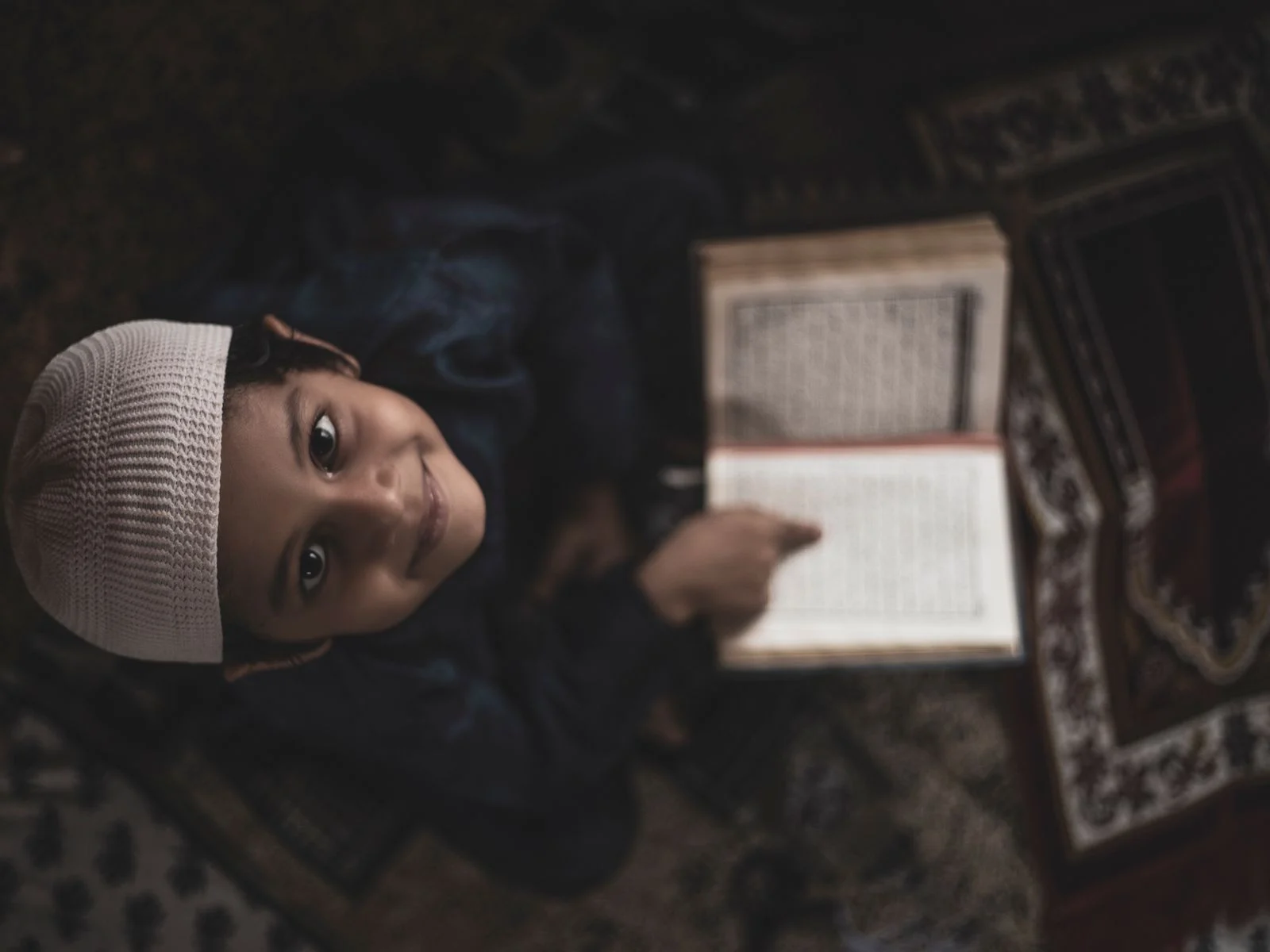
How Do You Keep a Young Child Engaged for the Whole Lesson?
Sessions for young children are shorter than adult classes, typically 30 minutes, and built around variety rather than long, uninterrupted drilling.
Teachers use repetition, encouragement, and simple interactive techniques suited to a child’s real attention span, adjusting the pace the moment focus starts to drift rather than pushing through it. A child who’s struggling to concentrate isn’t a sign something’s wrong; it’s simply a normal part of teaching young learners, and your teacher will adapt rather than force the pace.
What Will My Child Actually Learn, and in What Order?
Children follow the same structured path as adult beginners, just at a gentler pace: starting with Noorani Qaida to learn Arabic letters and pronunciation, then progressing into Quran Reading, Tajweed, and eventually Hifz or Islamic Studies if your family chooses to continue that far.
2
Quran Reading
Reading page by page.
Noorani Qaida alone typically takes 6 to 9 months for a young child, and that’s completely normal; the goal is a genuinely solid foundation, not speed.
Will I Know How My Child Is Progressing?
Yes. Your teacher will keep you informed on what your child is learning and how they’re progressing, and you’re always welcome to ask directly rather than wait for an update. Since you can sit in on any class, you can also see progress firsthand rather than relying solely on secondhand reports.
Can I Choose a Female Teacher for My Daughter?
Yes. Separate male and female teachers are available, and many families choose a female teacher for their daughters as a standing preference from the very first lesson. This is a simple, one-time choice, not something you need to request repeatedly.
What If My Child Has Never Learned Any Arabic?
That’s the normal starting point for most children, not an exception. Noorani Qaida assumes zero prior knowledge and begins with the Arabic alphabet itself, taught in English, Urdu, Hindi, or Pashto depending on what’s most comfortable for your family.
Kids’ Online Quran Classes: How Do They Work?
Classes are live, one-on-one video sessions with a certified, background-checked teacher, with a full seven-day free trial and no charges at all before you decide to continue.
1Book your free trial and tell us your child’s age and any teacher preference.
2Sit in on the trial class yourself and see the teaching style firsthand.
3Take up to seven days to decide, with no pressure at all.
4If it isn’t the right fit, we’ll match your child with a new teacher for another seven-day trial, still free.
7 daysNo card required
Free trial for your child, and you’re welcome to sit in.
No charges at booking or during either trial period.
Frequently Asked Questions From Parents
Give Your Child a Safe, Solid Start
Whatever your child’s age or starting point, their first class is completely free, and you’re welcome to be part of it from day one.
7 days
Free, no card required
Sit in on your child’s first class and see the teaching style for yourself.
