
Tajweed Course Online: Learn to Recite the Quran Correctly
Tajweed is the set of rules that governs how the Quran is correctly pronounced, so that every letter and sound is recited the way it was revealed. This page covers everything about learning Tajweed: what it actually teaches, how long it takes, the mistakes almost every student makes at some stage, and how live, one-on-one classes fix each one, whether you’re a complete beginner, a born Muslim correcting years-old habits, or a parent choosing a course for your child.

وَرَتِّلِ الْقُرْآنَ تَرْتِيلًا
“And recite the Qur’an with measured recitation.”
Surah Al-Muzzammil, 73:4
All levelsfrom beginner to fluent reader
6 to 12 monthsfor most adults
Female teachersfor sisters, every class
Live, one-on-onewith a seven-day free trial
What Is Tajweed?
Tajweed is the science of pronouncing every Arabic letter in the Quran correctly and giving it its full rights, covering articulation points, letter characteristics, nasalization, elongation, and stopping rules, so that reciting the Quran preserves both its sound and its meaning.
The word “Tajweed” literally means “to make better” or “to improve.” As a field of study, it exists because mispronouncing a single letter in Arabic can genuinely change a word’s meaning, and Muslim scholars have preserved a precise, unbroken tradition of how the Quran should sound since it was first revealed. Many scholars consider correct Tajweed obligatory when reciting the Quran, since it protects the text from the kind of drift that happens whenever something is passed down by sound alone.

What Does a Tajweed Course Actually Cover?
A Tajweed course covers Makharij (where each letter is articulated), Sifaat (each letter’s natural characteristics), the rules of Noon Sakinah and Tanween, the rules of Meem Sakinah, Qalqalah, Ghunnah, the different types of Madd (elongation), and the rules of stopping and pausing.
Makharij: Where Each Letter Comes From
Arabic letters are produced from five main areas of the mouth and throat, and getting the point of articulation wrong changes the letter entirely, not just its accent. A ق pronounced incorrectly can sound like a ك, changing the word itself.
Sifaat: Each Letter’s Natural Character
Every Arabic letter carries built-in qualities, heavy or light, aspirated or not, echoing or flat. ص and س look like they might sound similar to a beginner, but Tajweed teaches the real difference: one is heavy, one is light, and confusing them is one of the most common early mistakes.
Noon Sakinah and Tanween: Four Core Rules
When a “silent” noon or a tanween ending meets certain letters, one of four rules applies: Izhar (pronounced clearly, before throat letters), Idgham (merged into the next letter, with or without nasalization), Iqlab (converted into a nasalized meem sound before ب), or Ikhfa (concealed, neither fully clear nor fully merged, before the remaining letters).
Meem Sakinah, Qalqalah, and Ghunnah
A silent meem follows a similar but separate three-rule pattern (Ikhfa Shafawi, Idgham Shafawi, Izhar Shafawi). Qalqalah is the distinct “bounce” heard on certain letters when they carry no vowel. Ghunnah is the two-count nasal sound produced on a stressed noon or meem.
Madd: The Rules of Elongation
Madd governs how long a vowel sound is stretched, from a natural two counts up to a full six counts for Madd Lazim, the longest and most strict elongation rule. Getting Madd length wrong is one of the most common mistakes even experienced reciters catch themselves making.
What Do Students Find Difficult About Tajweed, and How Do We Solve It?
The most common struggles are confusing heavy and light letters, misjudging Madd length, trying to learn too many rules at once, and losing correct habits without regular revision; a live teacher who listens and corrects in real time addresses all four directly.
Confusing Heavy and Light Letters
Letters like ص and س, or ط and ت, sound nearly identical to an untrained ear but require completely different tongue and mouth positioning.
How we solve it: Your teacher drills these letters side by side during live sessions, correcting mouth position the moment a sound comes out flat instead of heavy.
Getting Madd Length Wrong
Stretching a vowel for the wrong number of counts is easy to do silently, since the difference between four counts and six is subtle without someone actually counting alongside you.
How we solve it: Teachers count Madd out loud with you until the correct length becomes automatic, not something you have to consciously calculate every time.
Trying to Learn Every Rule at Once
Tajweed has a genuinely large rule set, and students who try to absorb all of it immediately often end up overwhelmed and retaining very little.
How we solve it: Your course is broken into a structured sequence, one rule group mastered before the next is introduced, so nothing is rushed.
Forgetting Rules Without Revision
Tajweed rules fade quickly without repetition, and a student who learns a rule once and moves on often reverts to old habits within weeks.
How we solve it: Every lesson opens with a short revision of previous rules before new material is introduced, so nothing is learned once and lost.
Self-Studying From Apps or Videos Alone
Apps and videos can explain a rule, but they cannot hear whether you’re actually applying it correctly.
How we solve it: Every class is live and one-on-one, so a mispronounced letter or a mistimed Madd gets caught and corrected in the same session it happens.
How Long Does It Take to Learn Tajweed?
Most adults reach solid fluency in the core Tajweed rules within 6 to 12 months of consistent classes, while children typically take longer, often two to three years, since the material is genuinely dense and benefits from a slower pace at a young age.
Adults, intensive schedule
As little as 6 months
Adults, regular schedule
6–12 months
Children
2–3 years
As with Noorani Qaida, consistency matters more than raw study time. A student attending regularly and revising between classes will finish faster and retain more than one attending sporadically over a longer stretch.
Do I Need to Know How to Read Arabic Before Starting Tajweed?
Basic Arabic reading is recommended, but it isn’t a strict requirement; complete beginners are placed in a short foundation module covering the alphabet and vowels before moving into Tajweed rules themselves.
If you’ve already completed Noorani Qaida, you’re ready to begin Tajweed immediately. If you haven’t, your teacher will assess your current level in the first lesson and start exactly where you are, rather than assuming a baseline you don’t have.
Tajweed for Sisters: What’s Different?
Tajweed classes for sisters follow the identical curriculum, taught by a female teacher for every single class, guaranteed, whether the student is a child, a teenager, or an adult.
This isn’t a general preference we try to accommodate when possible; it’s a standing option available from your very first lesson. Many sisters specifically want to correct Tajweed habits formed years ago without switching between male and female teachers mid-course, and that consistency is built in from day one.
Tajweed for Kids vs. Tajweed for Adults
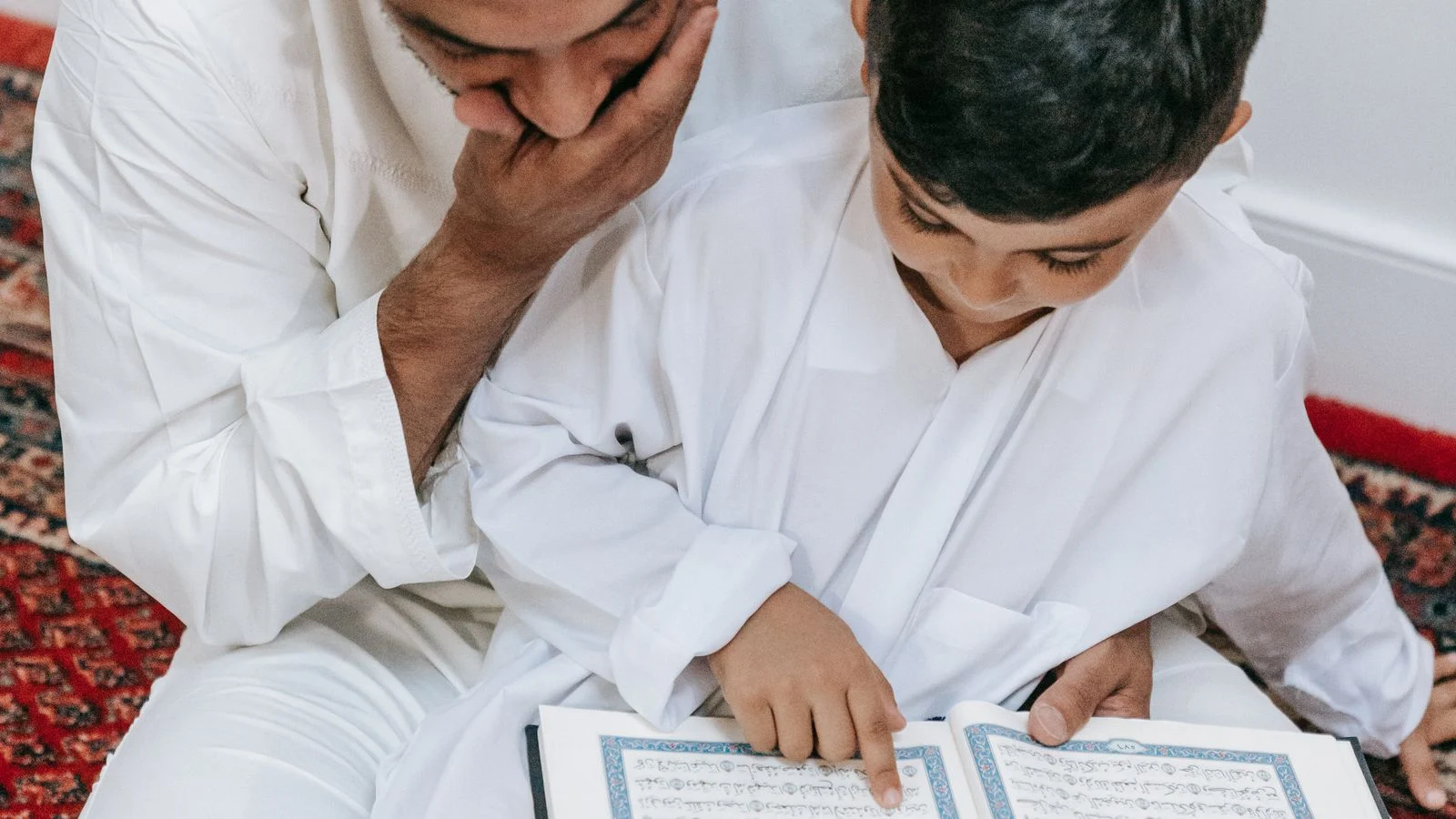
Tajweed for kids uses shorter sessions, more repetition, and a slower rule-by-rule pace over two to three years, while Tajweed for adults moves faster and can often be completed in 6 to 12 months of consistent study.
Adults tend to struggle most with unlearning old habits, particularly if they were taught to read Quran without proper Tajweed as children. Kids tend to struggle most with sustaining focus through a genuinely large rule set. Your teacher’s approach adjusts for which of these actually describes you or your child, rather than running one fixed pace for everyone.
Tajweed Course Online: How Do Classes Work?
Classes are live, one-on-one video sessions with a certified teacher, structured around the core rule groups in sequence, with a full seven-day free trial and no charges at all before you decide to continue.
1Book your free trial and tell us your current level, whether that’s zero or already Quran-reading fluent.
2Meet your teacher, who assesses your Makharij and current habits in the first session.
3Progress rule group by rule group, with revision built into every new lesson.
4If seven days isn’t enough to know the fit is right, we’ll match you with a new teacher for another seven-day trial, still free.
7 daysNo card required
Free Tajweed trial with a certified teacher, in your language.
No charges at booking or during either trial period.
What Comes After Tajweed?
After Tajweed, most students move on to Hifz (memorization) or Ijazah (formal certification), while others choose Tafseer and Quranic Arabic to deepen their understanding of meaning alongside correct recitation.
1
Tajweed
You are here
2
Hifz
Memorization
3
Ijazah
Formal certification
4
Tafseer
Meaning and context
5
Quranic Arabic
Grammar and vocabulary
Tajweed is the rule set that makes everything after it possible; Hifz without solid Tajweed simply memorizes mistakes, which is why we never rush a student into memorization before their pronunciation is genuinely secure.
Frequently Asked Questions About Learning Tajweed
Begin Your Tajweed Journey Today
Whether you’re correcting years-old habits or starting fresh after Noorani Qaida, learning to recite the Quran correctly starts with a single free trial class.
7 days
Free, no card required
Try live Tajweed classes with a certified teacher, in the language you’re most comfortable with.
