
Noorani Qaida Online: The First Step to Reading the Quran
Noorani Qaida is where every Quran-reading journey begins, whether you’re a child just starting school, an adult who never learned Arabic, or a new Muslim taking your very first steps. This page covers everything about the course: what it teaches, how long it takes, what students typically struggle with, and how our live, one-on-one classes solve each of those problems, in English, Urdu, Hindi, Pashto, or Arabic.

وَلَقَدْ يَسَّرْنَا الْقُرْآنَ لِلذِّكْرِ فَهَلْ مِن مُّدَّكِرٍ
“And We have certainly made the Qur’an easy for remembrance, so is there any who will remember?”
Surah Al-Qamar, 54:17
Ages 4 and upkids, teens and adults
2 to 6 monthsto complete, on average
17 to 20 lessonsletters to basic Tajweed
30 to 40 minuteslive, one-on-one classes
What Is Noorani Qaida?
Noorani Qaida is a beginner’s primer that teaches the Arabic alphabet, correct pronunciation, letter joining, and basic Tajweed rules, using real words and phrases taken from the Quran itself, before a student moves on to reading full Quran pages.
It’s traditionally attributed to Sheikh Noor Muhammad Haqqani, a scholar from Punjab in the Indian Subcontinent in the 19th century, who saw that most Muslims outside the Arab world had no simple way to learn correct Quranic pronunciation. The name reflects that purpose: “Qaida” means foundation, and “Noorani,” from “Noor” (light), refers both to the author and to the idea of Quranic knowledge as light. Since then it has spread from South Asia through the Middle East, and is now the standard starting point in Islamic schools and online Quran academies across Europe, North America, and Australia.
Who Is Noorani Qaida For? What Age Should a Student Be?
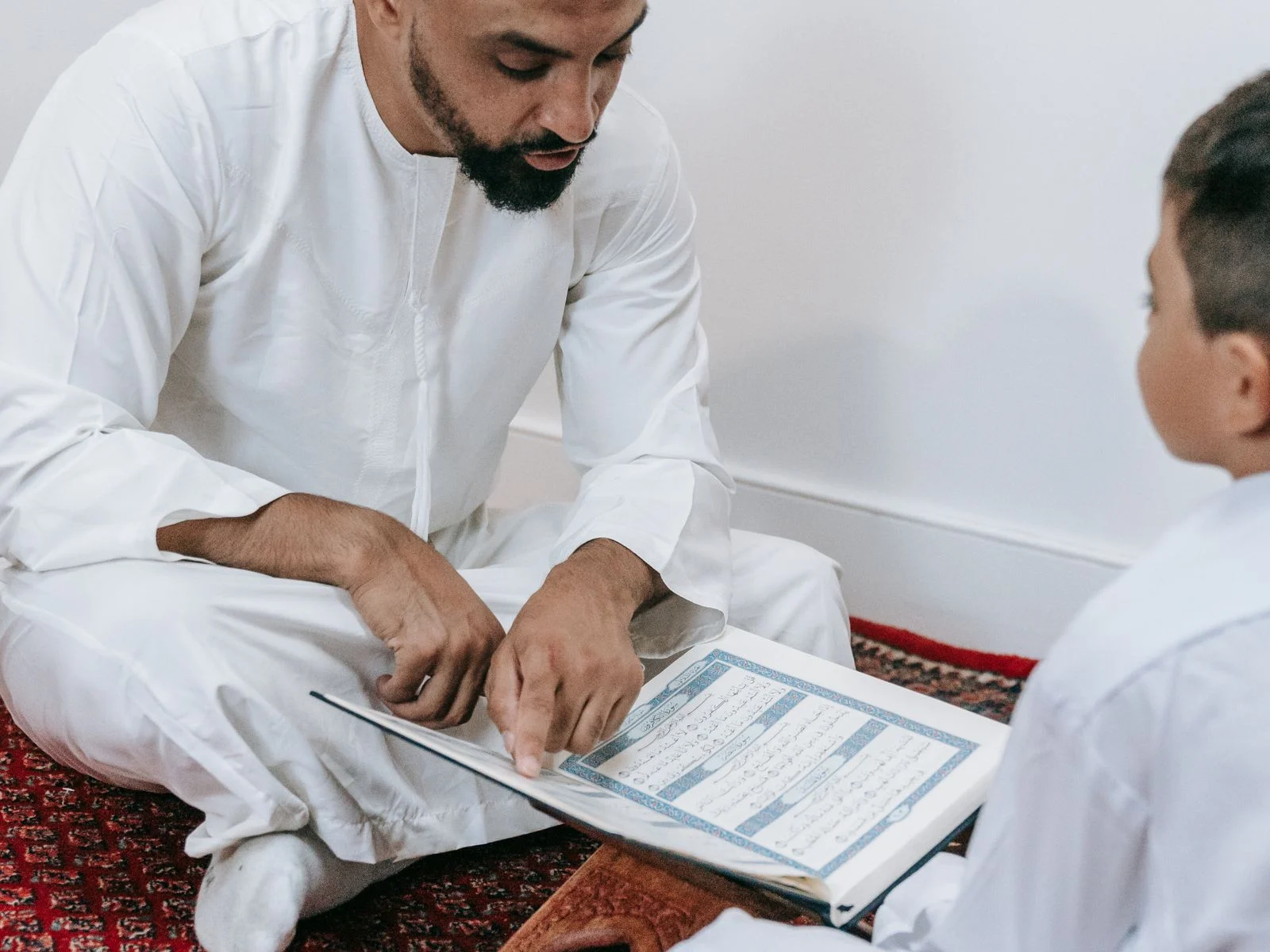
There is no upper age limit, and most children can start around age 4 to 6; the course works equally well for a first-grader, a teenager, an adult new Muslim, or a grandparent learning to read Quran for the first time.
Age changes the pace, not the content. Younger children need shorter, more playful sessions and generally take longer simply because their attention spans are still developing. Adults tend to move faster because they can sit through a full lesson and self-correct more consciously, but they also arrive with different obstacles, like impatience or years of mispronouncing a letter a certain way. Our teachers adjust their teaching style to whichever of these describes you or your child, rather than running one fixed program for everyone.
How Long Does It Take to Complete Noorani Qaida?
Most students complete Noorani Qaida in 2 to 6 months, depending on age and how often they practice; adults with daily practice often finish in as little as 6 to 10 weeks, while young children typically take 3 to 9 months.
Ages 4–6
6–9 months
Ages 7–10
4–6 months
Ages 11–15
3–5 months
Adults (16+)
2–4 months, sometimes as fast as 6–10 weeks
The single biggest factor isn’t age, though, it’s consistency. A student who reads for 20 to 30 minutes most days will finish faster and retain more than one who studies for two hours once a week. Our teachers build a realistic practice routine into your learning plan from the first lesson rather than just handing you a book and a schedule.
What Does Noorani Qaida Actually Cover?
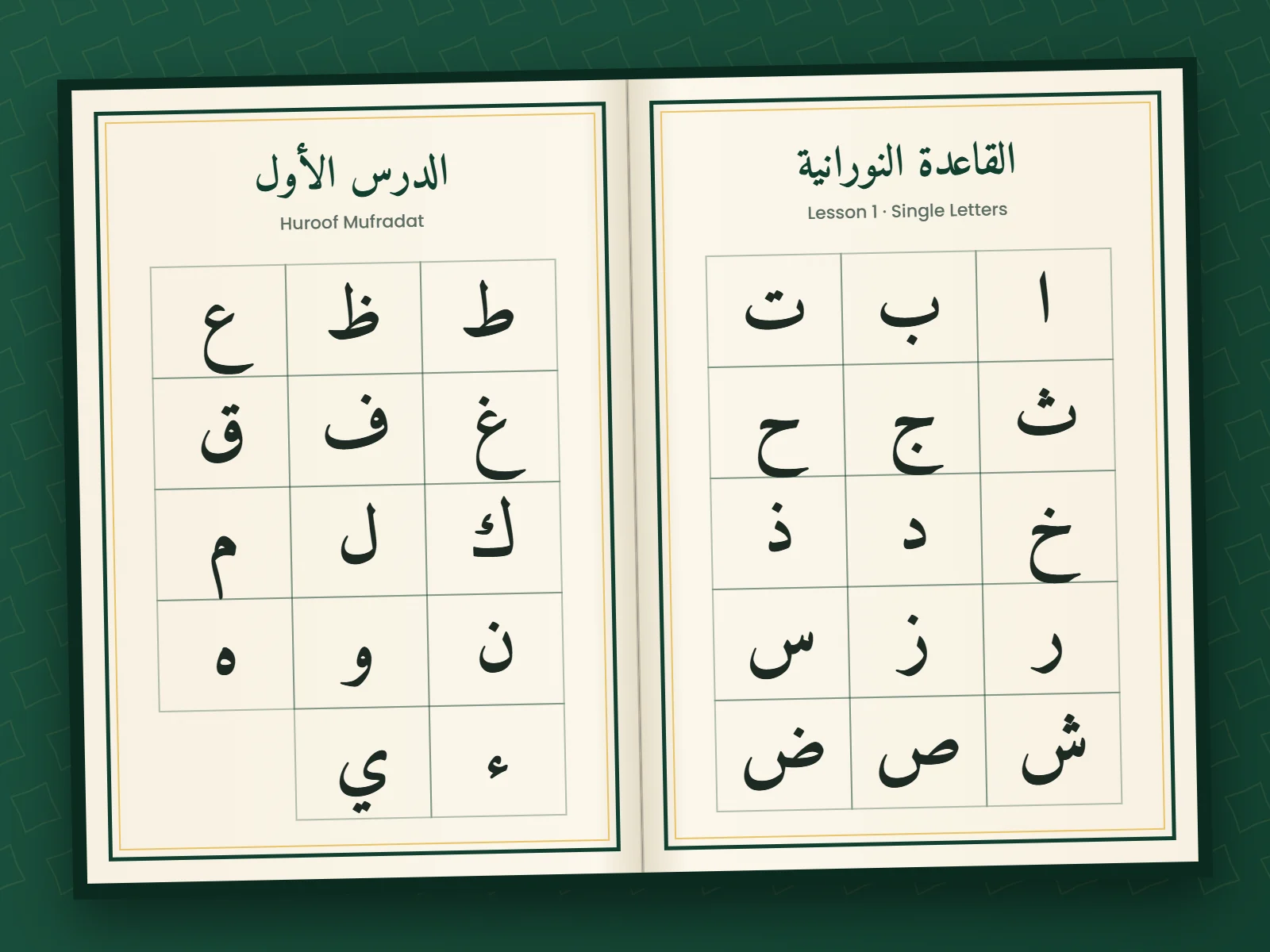
Noorani Qaida covers the 29 Arabic letters and their correct articulation points, short vowels, letter joining, elongation rules, nasalization (tanween), and an introduction to basic Tajweed, typically across 17 to 20 structured lessons.
The Arabic alphabet (Huroof)
All 29 letters, recognized by shape and sound, including letters that look similar but sound completely different, like ب, ت, and ث.
Makharij (articulation points)
Where each sound is physically produced, from the lips to the depths of the throat, which is what makes Arabic pronunciation genuinely different from most other languages.
Harakat (short vowels)
Fatha, Kasra, and Damma, the marks that turn a silent letter into a spoken sound.
Letter joining
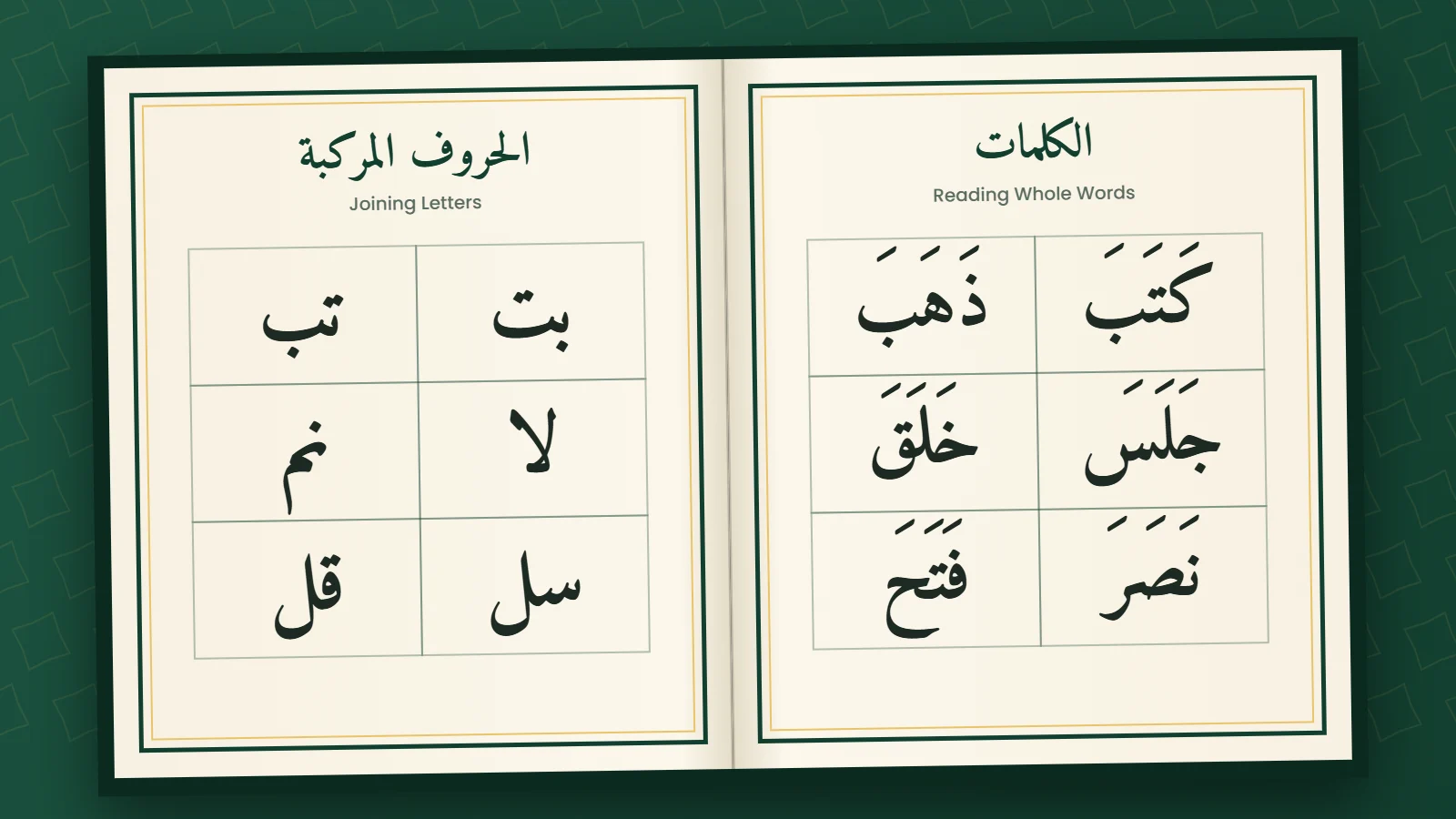
How individual letters connect into words, since Arabic letters change shape depending on their position.
Tanween and Sukoon
Nasal endings and the “no vowel” mark, both essential for reading fluently rather than word-by-word.
Madd (elongation rules)
When and how long to stretch a sound, which changes meaning if done incorrectly.
Introductory Tajweed
The basic pronunciation rules that prepare a student for full Tajweed study later.
Every example word and phrase is pulled directly from the Quran, so by the time a student finishes the last lesson, they aren’t just reading a made-up practice book, they’re already reading real Quranic text.
What Do Students Find Difficult About Noorani Qaida, and How Do We Solve It?
The most common struggles are confusing similar-sounding letters, mispronouncing throat letters, losing focus during repetitive drills, and trying to self-study without a teacher to correct mistakes in real time; a live, one-on-one class addresses every one of these directly.
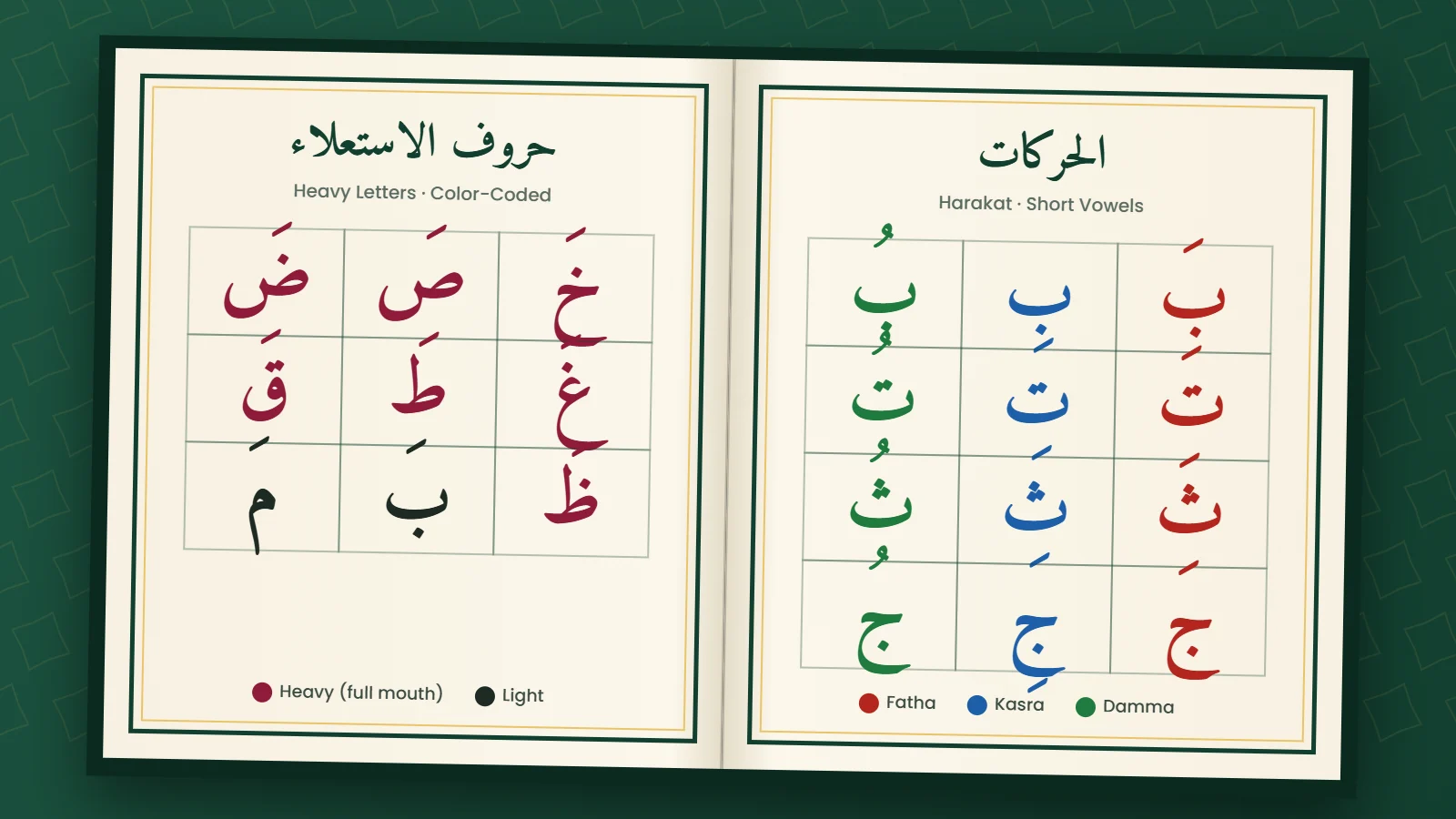
Confusing Heavy and Light Letters
Letters like ص، ض، ط، ظ are often read exactly like their lighter counterparts س، د، ت، ز, which flattens the sound and, later, changes the meaning of Quranic words.
How we solve it: Your teacher drills these letters in contrasting pairs during live sessions and corrects the mouth position in real time, something a book or app alone cannot do.
Mispronouncing Throat Letters
Letters such as ح، ع، خ، غ come from deep in the throat, but many beginners push them forward and pronounce them as ordinary mouth sounds.
How we solve it: Teachers demonstrate the correct articulation point live and listen closely until the sound is right, rather than letting an incorrect habit set in.
Mixing Up Short Vowel Sounds
Fatha, Kasra, and Damma sound similar to a beginner’s ear, and it’s common to read one in place of another, which slows reading and changes word meaning.
How we solve it: Short, repeated drilling with immediate correction, paired with English, Urdu, Hindi, or Pashto explanation depending on which language makes the sound clearest to you.
Losing Focus, Especially in Children
Repetitive drills can feel tedious for young learners, leading to short attention spans and slow progress.
How we solve it: Our teachers use short, engaging sessions with variety built in, rather than long uninterrupted drilling, and pace lessons around a child’s real attention span instead of a rigid schedule.
Rushing Ahead Before Mastering a Lesson
Many students, especially adults eager to reach the Quran, try to move to the next lesson before the current one is solid, which creates confusion later with longer words.
How we solve it: Your teacher won’t advance you until a lesson is genuinely secure, and revision of the previous lesson is built into every new session.
Learning Alone Without a Teacher
Videos and apps can introduce the material, but they cannot hear a mistake and correct it the moment it happens, which is how small errors become permanent habits.
How we solve it: Every class is live and one-on-one, so mistakes get caught and fixed in the same lesson, not weeks later.
Is Noorani Qaida Available in English?
Yes. Our Noorani Qaida classes are taught with full English explanation for every letter, rule, and sound, so no prior Arabic knowledge is needed to begin.
We also teach in Urdu, Hindi, and Pashto for students and parents who are more comfortable learning in those languages, and Arabic-speaking teachers are available on request. Whichever language makes a rule click for you is the language your teacher will use, rather than forcing everyone through the same explanation.
Is There a Color-Coded Noorani Qaida?
Yes. Color-coded editions mark Tajweed rules and articulation points with consistent colors so learners can visually recognize a rule before they’ve fully memorized it, and we provide a free color-coded Noorani Qaida PDF to every enrolled student.
Color-coding is especially useful for visual learners and younger children, since patterns like elongation or nasalization become recognizable at a glance rather than something to consciously recall every time. Your teacher will walk you through how to read the color key in your first lesson, so it supports your learning instead of becoming one more thing to memorize.

Noorani Qaida for Kids: What Makes It Different?
Noorani Qaida for kids uses the same lesson structure as the adult course, but with shorter sessions, more repetition, and a teacher trained to keep a young child engaged rather than simply working through the book page by page.
Most children begin around age 4 to 6, though we assess readiness individually rather than by age alone. Parents are always welcome to sit in on a class, and separate male and female teachers are available depending on your preference. Because the course takes several months for most children, we build in regular light revision so a child doesn’t forget early lessons by the time they reach the later ones.
Can Adults Really Learn Noorani Qaida From Zero?
Yes, and adults often complete it faster than children because they can sustain focus for a full lesson and consciously correct their own pronunciation once shown how.
Many of our adult students are new Muslims or born Muslims who were never formally taught to read Quran as children. There is no embarrassment in starting from the very first letter as an adult; it’s one of the most common reasons students come to us in the first place, and your teacher will never assume prior knowledge you don’t have.
Noorani Qaida Online Classes: How Do They Work?
Classes are live, one-on-one video sessions with a certified teacher, typically 30 to 40 minutes long, scheduled around your time zone, with a full seven-day free trial and no charges at all before you decide to continue.
1Book your free trial and tell us your (or your child’s) age and preferred language.
2Meet your teacher, who will assess your current level, even if that level is zero.
3Begin regular lessons, with each new lesson opening with a quick revision of the last.
4Progress at your own pace; if seven days isn’t enough to know if the fit is right, we’ll match you with a new teacher for another seven-day trial, still free.
7 daysNo card required
Free Noorani Qaida trial with a certified teacher, in your language.
No charges at booking or during either trial period.
What Comes After Noorani Qaida?
After completing Noorani Qaida, students move on to Quran Reading to build fluency page by page, then typically study Tajweed in depth, with Hifz (memorization) and Ijazah (certification) as longer-term paths for those who want to go further.
1
Noorani Qaida
You are here
2
Quran Reading
Fluency, page by page
3
Tajweed
Rules in depth
4
Hifz
Memorization
5
Ijazah
Certification
Noorani Qaida is deliberately the shortest course in the curriculum. Its entire purpose is to prepare you for everything that comes after it, so the moment you finish, your teacher will already know exactly where to place you next.
Frequently Asked Questions About Noorani Qaida
Begin Your Noorani Qaida Journey Today
Whether you’re a parent looking for your child’s first Quran teacher, an adult starting from zero, or a new Muslim taking your first step, Noorani Qaida is where it begins, and your first class is completely free.
7 days
Free, no card required
Try live Noorani Qaida classes with a certified teacher, in the language you’re most comfortable with.
